Press releases 2024

reset
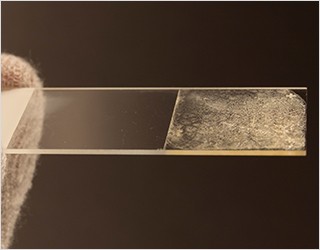
  • Every year, around four million people in Europe suffer healthcare-associated infections. Pathogens spread quickly via surfaces such as handrails, handles or touchscreens. To reduce the spread of pathogens, particularly in hospitals but also in public buildings, the EU-funded joint project SanFlex is researching a photocatalytic coating that is (additionally) grafted with super-acidic surface properties. This prevents the adhesion of pathogens and eliminates microorganisms as well. The aim of the project is to develop appropriate coating technologies for the cost-effective production of antipathogenic protective films for touchscreen applications. At the BAU 2025 trade fair in Munich, Germany, from January 13-17, 2025, the Fraunhofer FEP researchers will be presenting their initial results at the joint Fraunhofer stand no. 528 in Hall C2.

    more info
  • As part of the EU project “Phabulous” (grant agreement no. 871810), Fraunhofer FEP and JOANNEUM RESEARCH collaborated to develop innovative micro-optical structures that can be applied to large areas of polymer films using roll-to-roll technology. These structures open up a wide range of possible applications for solar cells or decorative aspects. The Fraunhofer researchers have now also succeeded in developing a new type of bird protection film that is particularly effective thanks to its UV contrast and therefore hardly affects the aesthetics of glass façades. The results will be presented at the Micro-Optics Summit 2024, from December 2 – 3, 2024, in Amsterdam.

    more info
  • Based on an industry-oriented competence portfolio, the Fraunhofer Institute for Electron Beam and Plasma Technology FEP in Dresden offers a broad spectrum of scalable research and development opportunities. Our mission is to apply our technological innovation potential for novel production processes and to harness it to meet society's need for resource conservation and climate neutrality. Considering the growing demand for climate-neutral building materials, new manufacturing processes are also being sought in the construction sector. The Fraunhofer FEP is conducting research into innovative electron beam-assisted processes for increased biogenic limestone synthesis using phototrophic microorganisms in order to support the decarbonization of the cement industry. In this way, the CO2 footprint of cement formulations can be further reduced in the future and fossil limestone can be gradually replaced as a primary resource. This research project will be presented at the BAU 2025 trade fair in Munich, from January 13 – 17, 2025, at the joint booth of Fraunhofer in hall C2, booth no. 528.

    more info
  • After a first run in the winter semester 2023/2024, the University of Applied Sciences (HTW) in Berlin has extended Frank-Holm Rögner's teaching assignment in the M11 module “Historical Methods and Current Developments” in Department 5 “Design and Culture” for the master's program “Conservation and Restoration” from 0.5 hours per week to 1 hour per week. In the future, Rögner will give the lecture series “Cleaning principles and technologies for surface treatment and conservation” during the winter semester.

    more info
  • In the construction and building sector, sustainable solutions for reducing energy requirements and improving the carbon footprint are more in demand than ever. In view of rising energy prices and strict regulations for lower energy consumption in buildings, innovative technologies such as perovskite and organic solar cells offer great potential. However, the cost, durability and efficiency of these solar cells pose a major challenge. As part of the EU-funded PEARL and BOOSTER projects, the Fraunhofer FEP is developing new coating and process technologies that will significantly increase the durability and efficiency of solar cells and sustainably reduce costs and material requirements. At the BAU 2025 trade fair, Fraunhofer FEP will be presenting a number of pioneering technologies and demonstrating their potential applications in the construction and building sector from January 13 to 17, 2025 at the joint Fraunhofer booth in Hall C2, Booth 528.

    more info
  • Piezoelectric coatings play a key role in medical technology, microelectronics and sensor technology, for example in the manufacturing of ultrasound microscopes that examine ever smaller semiconductor components and biological cell structures. However, the increasing demands on the quality and reproducibility of these coatings place high demands on the complex coating processes, which require many parameters to be precisely coordinated. In order to meet this challenge, the Fraunhofer Institute for Electron Beam and Plasma Technology FEP is developing a digital twin of the coating process for piezoelectric thin films as part of the BMBF-funded DigiMatUs project (FKZ 13XP5187D). This enables the digital mapping and optimization of the processes and leads to a significant improvement in the performance and reproducibility of ultrasonic sensors.

    more info
  • Flexible ultra-thin glass is an innovative material that combines the chemical resistance and scratch resistance of glass with the flexibility and weight reduction of plastics, primarily due to its low thickness of ≤ 100 µm. Processing ultra-thin glass requires special handling to prevent breakage during production, which has been a major barrier to its introduction into new applications. Within the Glass4Flex and CUSTOM projects, funded by the Federal Ministry of Education and Research (BMBF) and the Federal Ministry of Economics and Climate Protection (BMWK), project partners at the Fraunhofer Institute for Electron Beam and Plasma Technology FEP developed a unique process chain for the in-line coating of ultra-thin glass. They also evaluated suitable characterization methods for the surface and edge strength of the thin glass to further optimize the material properties through flash lamp tempering. A demonstrator of flexible thin glass with an optical interference layer system will be showcased at glasstec 2024 in Düsseldorf, Germany, from October 22 – 25, in the glass technology live area in Hall 11, Stand No. F27.

    more info
  • A new multi-chamber system for aqueous ultrasonic cleaning at the Fraunhofer FEP will provide flexible cleaning options for industrial component cleaning in the future. This system complements the LinTR training laboratory, which was developed under the leadership of the Fraunhofer FEP together with the Fraunhofer IPA, IWS and IVV Dresden. The learning laboratory offers a comprehensive, modular training concept for industrial parts cleaning for a wide range of requirements and, for the first time, the possibility of training complex cleaning processes in an extended laboratory environment. The new capabilities will be presented during the exhibition at the 32nd Industrial Component Cleaning Conference, September 11 – 12, 2024, in Dresden, Germany.

    more info
  • With the exit from fossil fuels and the achievement of climate targets, alternative technologies are needed for heating and cooling. However, conventional heat pumps and air conditioning systems are noisy, consume a lot of electricity and use refrigerants that are harmful to the climate. This is why scientists around the world are working on electrocaloric heat pumps – they use materials that can change their temperature when an electric field is applied, thereby generating heat or cold. As part of the Fraunhofer lighthouse project ElKaWe, the Fraunhofer Institute for Electron Beam and Plasma Technology FEP has made significant progress in the development of thin films to improve heat transfer in electrocaloric heat pumps. The latest research results will be presented at PSE 2024, September 2 – 5, 2024, in Erfurt, Germany, during the conference and exhibition.

    more info
  • Current perovskite solar cells face significant challenges in stability and durability, hindering their long-term application. To address these issues, the European Union has launched the innovative PEARL project, which aims to enhance perovskite solar cells with cutting-edge carbon electrodes. This EU-funded initiative aspires to significantly improve the efficiency, stability, and cost-effectiveness of these solar cells, targeting efficiencies of over 25% and substantially lower production costs. PEARL represents a major step forward in making sustainable solar power more accessible and reliable.

    more info
  • Transitioning to climate-friendly construction / 2024

    Bio-concrete and biogenic construction materials with cyanobacteria

    Research News / July 01, 2024

    Fraunhofer researchers have developed a method of creating biogenic construction materials based on cyanobacteria. The bacteria multiply in a nutrient solution, driven by photosynthesis. When aggregates and fillers such as sand, basalt, or renewable raw materials are added, rock-like solid structures are produced. Unlike traditional concrete production, this process does not emit any carbon dioxide, which is harmful to the environment. Instead, the carbon dioxide is bound inside the material itself.

    more info
  • Graphene layers promise great progress and increased efficiency in solar applications, energy storage and smart glass applications due to their outstanding properties, including transparency, barrier effect and conductivity. The lack of scalable deposition processes with consistently high layer quality at cost-efficient throughputs has so far prevented the breakthrough of this promising material. As part of the funded EU project NewSkin (GA No. 862100), the Fraunhofer Institute for Electron Beam and Plasma Technology FEP has developed an innovative PECVD process that enables the deposition of graphene at high process speeds and offers higher production throughputs and a wider range of substrates at lower process temperatures. The researchers will present the process at Manufacturing World Tokyo from June 19 - 21, 2024 at booth No. E 53-11 in Tokyo, Japan.

    more info
  • On the evening of June 14, 2024 Dresden will once again be a hive of activity and many young as well as old night owls will be able to experience science and research interactively at Dresden's universities, research institutions and scientific companies and laboratories. In keeping with the motto of this year's 21st Dresden Science Night – United By Science – the Fraunhofer Institutes FEP, IFAM, IKTS and IWS will once again be jointly opening the doors to the Fraunhofer Campus at Winterbergstrasse 28.

    more info
  • © Fraunhofer HHI

    Working together to expedite technological innovations in the fields of battery cell and semiconductor technology: That is the aim of a comprehensive international collaboration program funded by the Korean Ministry of Trade, Industry and Energy (MOTIE). The Fraunhofer-Gesellschaft, with eight of its institutes, is their partner in Germany. On Wednesday, the collaboration was sealed with a letter of agreement and the opening of a coordination hub

    more info
  • The Fraunhofer Institute for Electron Beam and Plasma Technology FEP expands its campus with the RESource-Efficient Energy Technologies (RESET) research center in Dresden. With state-of-the-art laboratory facilities for sputter epitaxy, biomedical applications and electron beam technologies, the institute aims to set new standards in research. The strategic research focus for activities in the building are the development of innovative process technologies, for example for the generation, storage and processing of hydrogen (power-to-X) and for the deposition of high-precision gallium nitride (GaN) layers on silicon wafers. The opening was attended by high-ranking guests from industry and politics.

    more info
  • Dresden / April 17, 2024

    With effect from April 17, 2024, the Fraunhofer FEP bears the long name Fraunhofer Institute for Electron Beam and Plasma Technology FEP.

    more info
  • Pooling expertise, leveraging synergies / 2024

    Integration of Fraunhofer FEP's Microdisplays and Sensors business unit into Fraunhofer IPMS

    Dresden / March 07, 2024

    The Microdisplays and Sensors business unit at the Fraunhofer Institute for Organic Electronics, Electron Beam and Plasma Technology FEP will be integrated into the Fraunhofer Institute for Photonic Microsystems IPMS with retroactive effect from January 1, 2024. Both institutes are closely connected, particularly within this business unit, and share infrastructure at the Dresden site. By pooling expertise and streamlining structures, we anticipate the creation of synergies that will strengthen the research field, expedite development and thus benefit customers and partners.

    more info
  • Dresden / February 13, 2024

  • High-resolution light modulators determine the graphical experience in virtual reality (VR) glasses or the performance in optical communication. A new backplane architecture for light modulation has been developed at Fraunhofer FEP, thanks to which extremely high refresh rates now lead to improved image quality and optical modulation. The new backplane architecture and the high-resolution displays developed for it will be presented from 30 January to 1 February 2024 in San Francisco, USA, at Photonics West 2024, booth no. 4136 and at SPIE AR/VR/MR, booth no. 6200.

    more info